Seven addresses that reveal how Bangkok dines
Bangkok cooks with certainty. The city understands its culinary capital and carries it with composure. Over the past decade, dining here has sharpened into something deliberate and self-assured. Chefs returned from international kitchens with discipline and perspective. Family-run institutions refined their rhythm. Hotel dining rooms developed regional clarity. The result is a capital that eats with intention.
Those who spend full seasons here recognise the patterns. Reservations circulate quietly through private messages. Tables fill earlier in the evening. Diners arrive aware of pacing and structure. Conversations stretch across courses with measured ease. Bangkok’s food culture operates as a layered ecosystem. Fine dining, neighbourhood dining rooms, and civic institutions coexist with confidence.
Le Du
Silom balances commerce and after-hours energy, and Le Du sits squarely within that intersection. Thai cuisine is approached through seasonality and compositional control. The tasting menus follow agricultural rhythm with precision. Produce determines structure. Technique clarifies flavour.
View this post on Instagram
A river prawn course channels khao chae traditions through careful reinterpretation. Floral aromatics lift the opening notes. Fermented undertones settle with quiet depth. Acidity sharpens richness and keeps the sequence aligned. Each course builds into the next with measured progression.
The dining room reflects contemporary Bangkok polish. Clean architectural lines frame the space. Lighting flatters both the plate and the company. Service moves with confident timing. Later reservations often include chefs on their evenings off and collectors extending conversations into the night.
Nahm at COMO Metropolitan Bangkok
Sathon’s skyline gives way to calm authority inside COMO Metropolitan Bangkok. Nahm continues to shape the upper register of Thai dining with structure and depth, treating heritage recipes as living frameworks. The tasting progression reads like a disciplined exploration of Thai flavour architecture.
View this post on Instagram
Canapés introduce the grammar of spice and texture. Soups layer heat and aromatics with composure. Shared mains reinforce the communal cadence central to Thai dining culture. One dish that anchors the experience is Kua Gapi, a savoury coconut relish of charcoal-grilled catfish and krachai wild ginger. Its intensity reveals itself gradually. The kitchen suggests pairing it with rice first, followed by vegetables and boiled egg to round the palate and create balance across each bite.
Shrimp paste, lemongrass, garlic, and chillies provide structural backbone throughout the menu. Fermentation deepens complexity in controlled strokes. The room hums with composed conversation, and service anticipates rhythm with quiet awareness.
Hashiri at The Athenee
At The Athenee, Hashiri integrates Japanese seasonal philosophy into Bangkok’s refined dining circuit. The name references the first harvest of the season, and the kitchen honours that principle through disciplined ingredient rotation. Temperature receives exact calibration. Sauces achieve balance through restraint.
View this post on Instagram
The tasting journey opens with cool precision and moves steadily into deeper warmth. Monkfish liver arrives structured and clean. Beef cheek paired with foie gras gains lift from controlled acidity. Claypot rice develops a golden crust as it rests on heated stone, adding texture gradually across the course. Technique operates with quiet authority.
Somtum Der
From hotel dining rooms, Bangkok’s rhythm shifts naturally to street-level Silom. Somtum Der presents Isan cuisine with clarity inside a focused and grounded dining room. The space feels direct and purposeful. The cooking carries conviction.
Som tum Thai offers balance where sweetness, acidity, and saline notes align cleanly. Isan variations introduce fermented fish sauce and assertive depth. Preparations incorporating vermicelli or shellfish reward diners fluent in complexity. These flavours command attention and linger.
View this post on Instagram
Grilled pork neck anchors the table with smoky edges and tender structure. Sticky rice absorbs sauce and unifies the meal. Beer arrives instinctively alongside. Tables fill with local professionals unwinding and families ordering confidently from memory.
Polo Fried Chicken
Just beyond Lumphini Park, Polo Fried Chicken remains one of Bangkok’s civic dining institutions. The dining area is lively, local, and unpretentious. Lawyers, bankers, and chefs gather here on their days off. Morning runners drift in for late lunches. Families return across generations. Conversations unfold over shared plates with comfortable familiarity.

Thai-style fried chicken emerges crisp and evenly seasoned, crowned with caramelised garlic that perfumes the table. The meat retains moisture beneath the crackling skin. Sticky rice and papaya salad complete the composition. Grilled pork neck often joins the order, adding smokiness and depth. Beer circulates steadily between tables.
Tang Jai Yang
Bang Kho Laem operates with an understated rhythm, and Tang Jai Yang mirrors that temperament. The setting feels modest and practical. The cooking remains precise. Barbecued pork defines the experience with steady execution.
View this post on Instagram
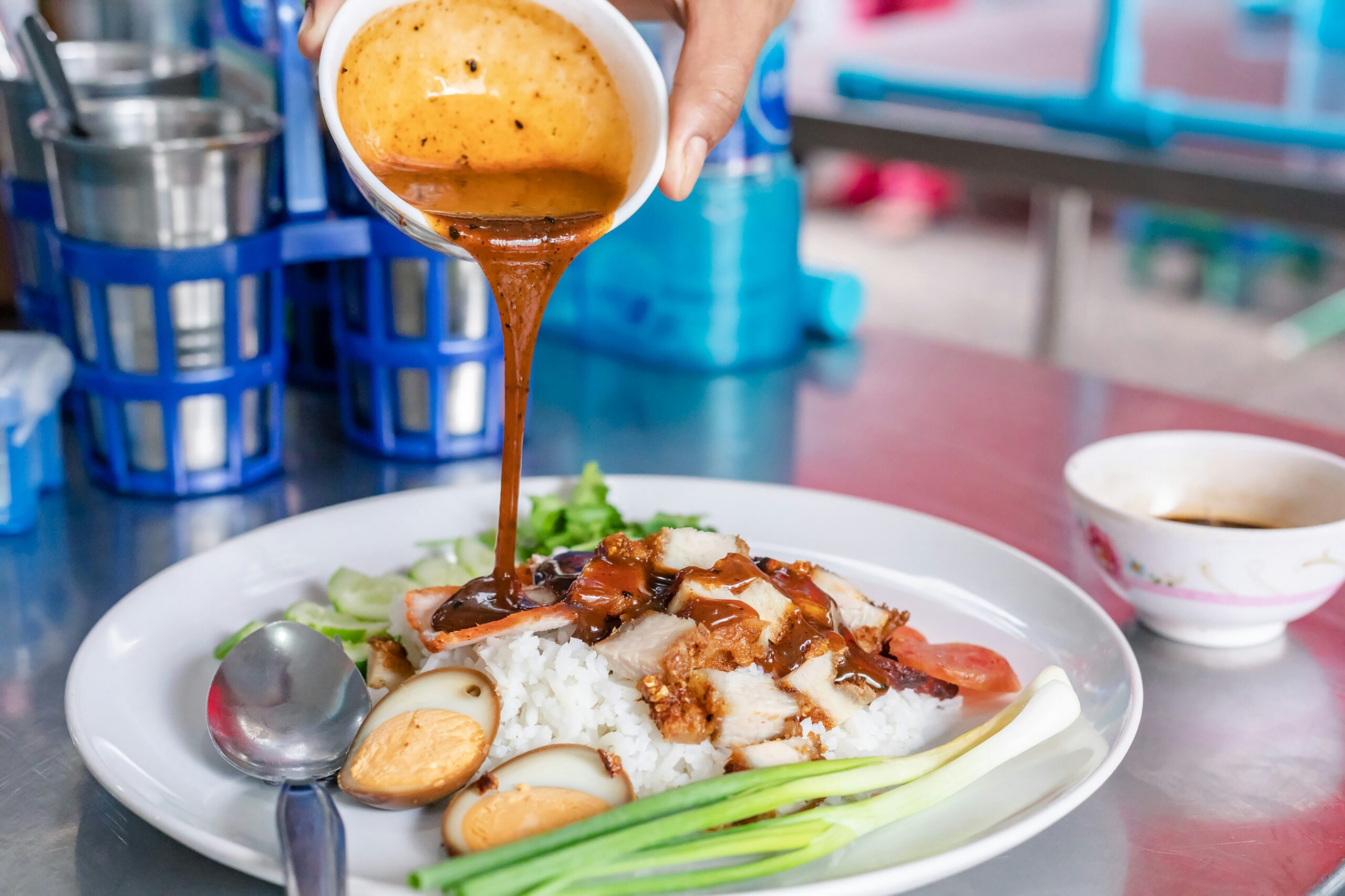
Char siu glazes caramelise evenly, delivering balanced sweetness and smoke. The meat remains supple whether served over rice or egg noodles. Bok choy and a fried egg add structure to the plate. A measured spoon of chilli sauce sharpens the profile cleanly.
Lunch service moves with efficient familiarity. Nearby business owners and long-time residents settle in quickly. Orders arrive without delay. Repetition rewards focus here. Tang Jai Yang demonstrates Bangkok’s respect for craft sustained through daily discipline.
Ten Suns
In Phra Nakhon’s old quarter, Ten Suns operates inside a modest noodle shop framed by open windows and circulating fans. The space remains simple. The cooking carries weight.
View this post on Instagram
Braised beef noodle soup forms the centrepiece. Cuts range from tongue to shank, simmered in broth layered with Chinese spice and rounded beef richness. The flavour unfolds steadily across the palate. Meatballs introduce additional texture. Egg noodles retain firmness while rice noodles soften the experience.
Mid-morning arrivals secure broader selection before popular cuts diminish. Communal seating encourages brief exchanges between regulars.
The New Bangkok Table
Bangkok’s dining culture now moves with assured cadence. Seasonal return deepens familiarity. Tables reveal themselves through experience and observation. Bangkok’s culinary maturity rests in confidence carried quietly across neighbourhoods and price points. The capital cooks with authority for those prepared to meet it at its level, whether across a tasting menu or over garlic and rice.
Image credit: Unsplash/Pinterest

Angelo De Guzman is an international music and travel journalist who tracks the year in festivals and flight numbers. He covers luxury travel, global DJs, and dance music culture while breezing through departures and five-star hotels. You’ll find him backstage or at a chef’s table, occasionally all in the same weekend. He remains convinced that champagne tastes better when his seat number has only one digit.