Exclusivity personified
Dubai has always been a city that shines in scale. Restaurants hover above the skyline, dining rooms stretch into the distance and a single service can feel like a small festival. Yet some of the most interesting meals in the city now happen far from this sense of largeness. They take place in quiet corners, on rooftops, in hidden rooms and at counters where there are barely enough seats to form a crowd. Twelve seats. Ten seats. Four, in one case.
These rooms are not trying to be exclusive for the sake of exclusivity. They are built on something else entirely. By shrinking the dining room, they change the rhythm of the meal and strip dining back to its essentials. There is no wall between chef and guest, no distance between plate and conversation. Time slows, hands move with care and the food lands seconds after leaving the pass. What follows often feels less like a restaurant service and more like a dialogue.
Dubai may be known for spectacle, but its smallest tables reveal something far more interesting. Here are the rooms reshaping what intimacy means in a city built to impress.
Moonrise – 12 seats
Chef Solemann Haddad
View this post on Instagram
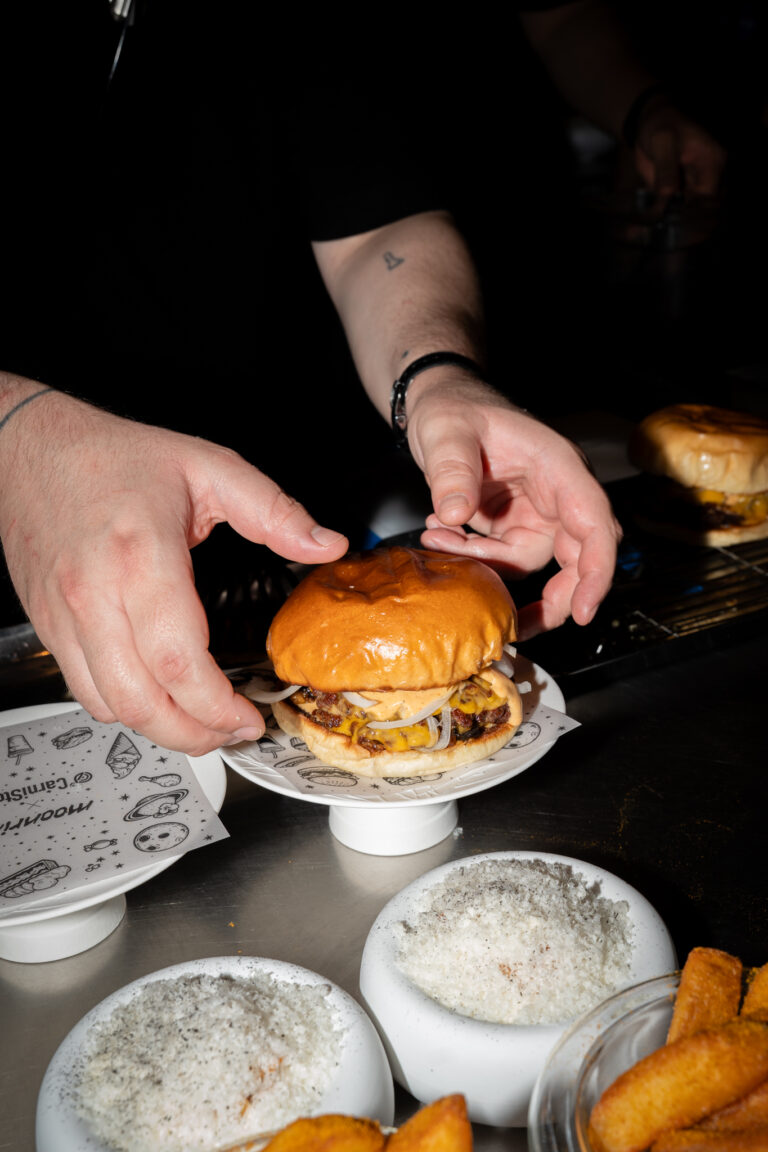
Moonrise sits quietly on a rooftop in Al Satwa, a glass box overlooking a city that has shaped so much of what we eat today. Chef Solemann Haddad cooks just a few steps from the twelve seats wrapped around the counter, and that closeness defines the experience. His food is unmistakably Dubai, informed by the flavours he grew up with and the many cultures that have shaped the city’s table. Familiar notes reworked with precision, comfort reimagined with confidence. For anyone who grew up here, it feels like tasting home through a new lens. Intimate, grounded and quietly nostalgic, it’s a reminder that some of the most meaningful meals in Dubai happen in the smallest rooms.
Hōseki – 9 seats
Chef Masahiro Sugiyama
View this post on Instagram
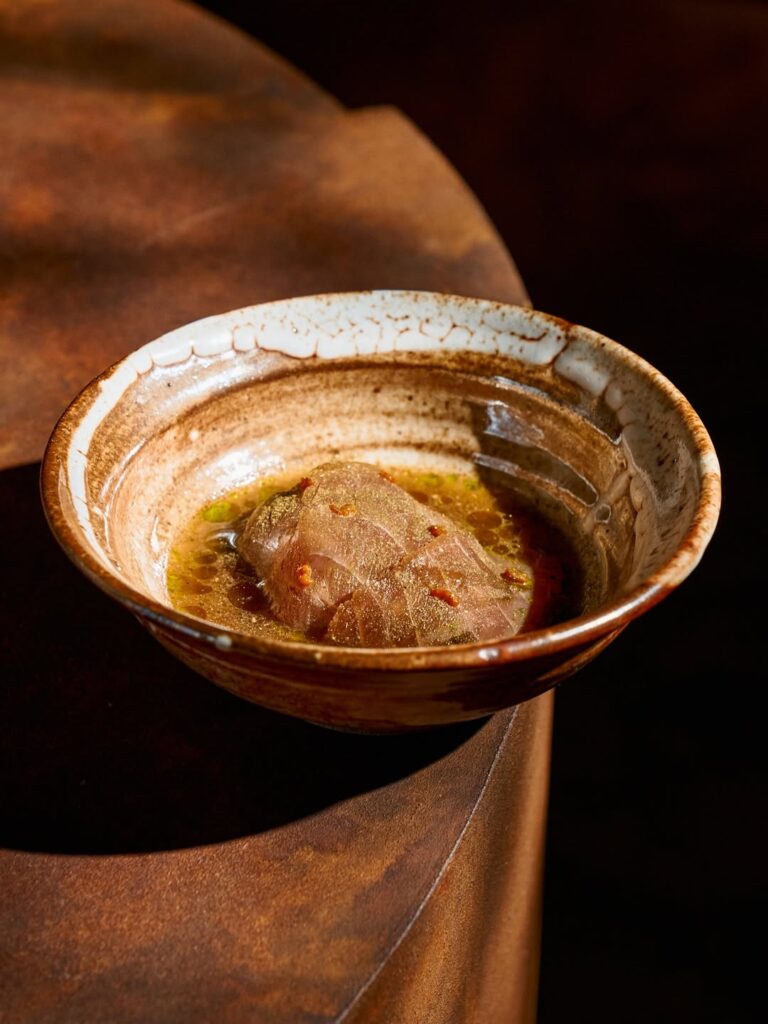
Inside the Bvlgari Resort, Hōseki offers just nine seats facing Chef Masahiro Sugiyama. There is no menu. Before anything begins, he asks what you like, then works quietly, one piece of sushi at a time. The setting is calm and beautifully restrained, grounding in a way that immediately slows you down. Each cut, each brush of soy, each shape of rice is executed with precision and care, the kind of focus you associate with a revered omakase counter in Japan. Nothing is rushed. Nothing is over-explained. The intimacy of the room allows the food, and the moment, to stand entirely on their own. If Dubai often moves quickly, Hōseki is where it pauses.
Chez Wam Chef’s Table – 6 seats
Chef Hadrien Villedieu
View this post on Instagram
At Chez Wam, the six-seat chef’s table sits at the kitchen counter, not beside it. Chef Hadrien Villedieu works with his team right in front of the guests, weaving French technique with influences drawn from the city he now calls home. The tasting menu carries a sense of play, from the ideas behind the dishes to the artwork and plates they arrive on, all thoughtfully considered without ever feeling forced. With just six seats, the experience is direct and personal. The energy of the dining room fades into the background as you focus on the kitchen in front of you, watching the rhythm of service unfold. It feels immersive, relaxed and genuinely fun, like being invited into the heart of the restaurant rather than seated around its edges.
BRIX Journey Dessert Experience – 12 seats
Chef Carmen Rueda
View this post on Instagram
BRIX Journey is a twelve-seat dessert counter that approaches pastry with the discipline and intent usually reserved for savoury tasting menus. Led by Executive Pastry Chef Carmen Rueda, it is a dessert-only restaurant, one of very few worldwide built entirely around this idea. The set menu unfolds as a sequence of textures, temperatures and flavour memories, balancing sweet and savoury elements with restraint. Nothing here leans cloying. Ice creams are churned moments before serving, warm components travel only a few centimetres before reaching the plate, and timing becomes integral to the experience. Thoughtfully composed non-alcoholic pairings accompany each course, reinforcing the sense of balance rather than excess. In such a small room, every detail matters, and BRIX succeeds in showing that dessert can carry narrative, structure and depth, not just indulgence.
TakaHisa Omakase – 8 seats
Chefs Taka and Hisa
View this post on Instagram
The omakase counter at TakaHisa is quietly spoken about as one of the best Japanese dining experiences in the country. With just eight seats, chefs Takashi Namekata and Hisao Ueda work side by side, serving wagyu, sushi and seafood with a level of finesse that feels deeply rooted in tradition. The quality of the ingredients is immediately apparent, matched by premium pairings and a team that brings warmth without distraction. Everything here is about respect for produce and process. You hear the rice being shaped, the blade meeting fish, the brief pause before a piece is placed in front of you. Conversation flows when it adds something, and silence is allowed when it matters more. It is the kind of omakase that delivers a true sense of Japan, without leaving Dubai, built on depth, precision and care rather than performance.
FZN Counter – 13 seats
Chef Torsten Vildgaard
View this post on Instagram
At FZN, the counter stretches to thirteen seats, just beyond the strict definition of small, but the sense of intimacy remains. This is the fastest restaurant in Dubai to reach three Michelin stars, and the confidence shows. Chef Björn Frantzén’s vision is carried by a precise, deeply aligned team led in Dubai by Chef Torsten Vildgaard. From the moment you sit at the counter, you feel the flow between kitchen and front of house, seamless and unforced. Cooking happens in full view, built around fire, clarity and quiet control. Being seated here is not just about watching plates come together, but about understanding the rhythm of the room. Every movement is intentional, every interaction warm and considered. At thirteen seats, the experience still feels close, immersive and finely tuned, dinner unfolding as a form of craft rather than spectacle.
LahKee – 4 seats
Chefs Mark Louies and Mary Calbay
View this post on Instagram
LahKee may not operate as a formal counter-only restaurant, but it carries the intimacy and focus of a much smaller room. Tucked away inside Al Safa Complex, it feels deliberately off the grid, a hole-in-the-wall in a city better known for five-star dining rooms. Run by a husband-and-wife duo, the kitchen turns out pan-Asian cooking shaped by Filipino, Japanese and Chinese influences, built on strong fundamentals rather than excess. Bao buns, noodles and short ribs anchor the menu, executed with confidence at the wok. The open kitchen sits at the centre of the space, with stools pulled close enough to watch the rhythm of service unfold. Old cassette players, posters and CDs give the room a nostalgic, lived-in feel.
Savryn Dining Room – 7 seats
Chef Shehab Medhat
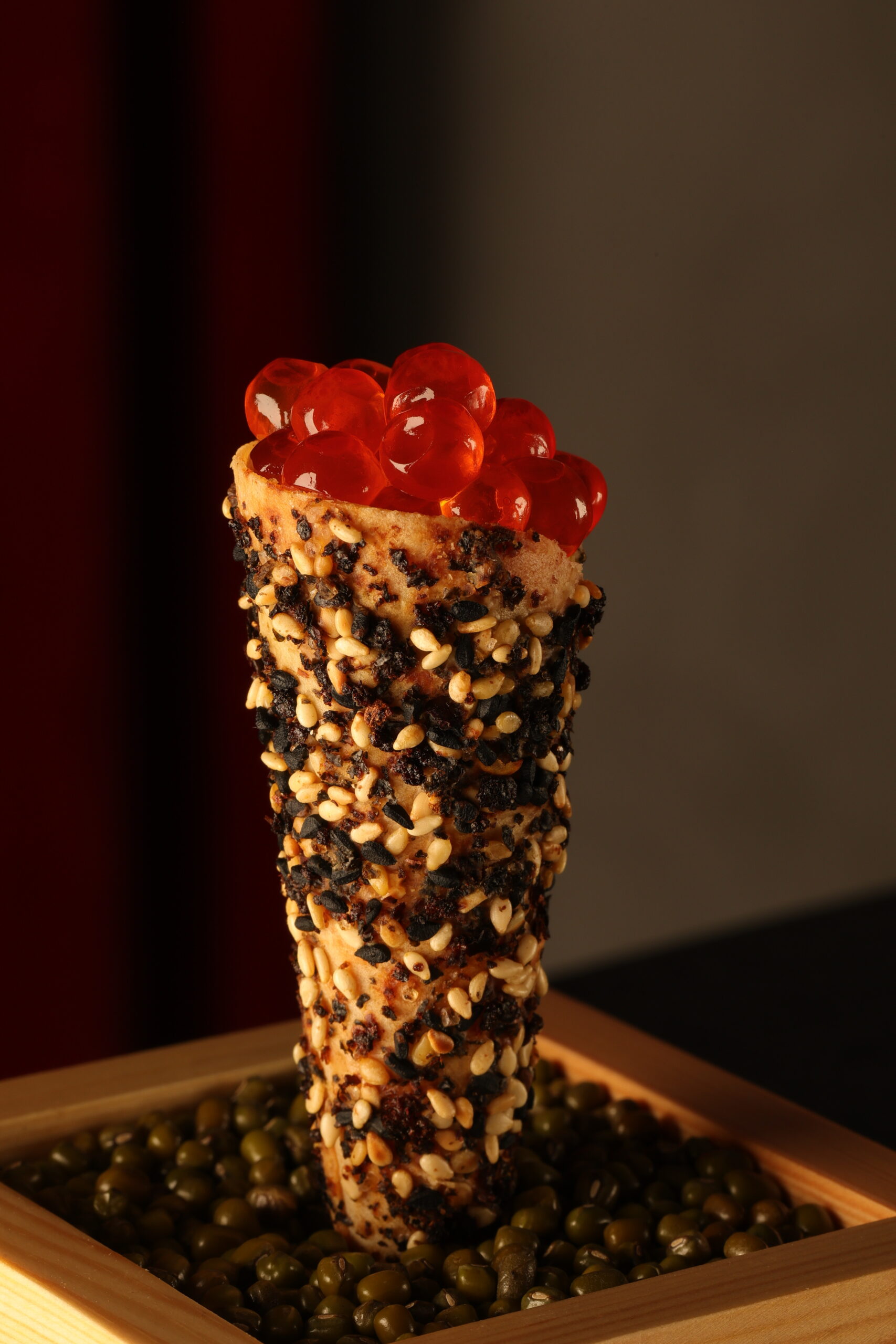
Savryn is one of the smallest dining rooms in the city, with seven seats gathered around the counter. It feels genuinely new for Dubai. Chef Shehab, winner of Top Chef Arabia, brings a distinctive take on African and Middle Eastern flavours, shaped by his own background and experience. The room is quiet and focused, non-licensed, with both a tasting menu and à la carte available. With so few seats, dishes move directly from the kitchen to the counter, and the experience remains close and attentive throughout.
Tezukuri – 14 seats
Chef Neha Mishra
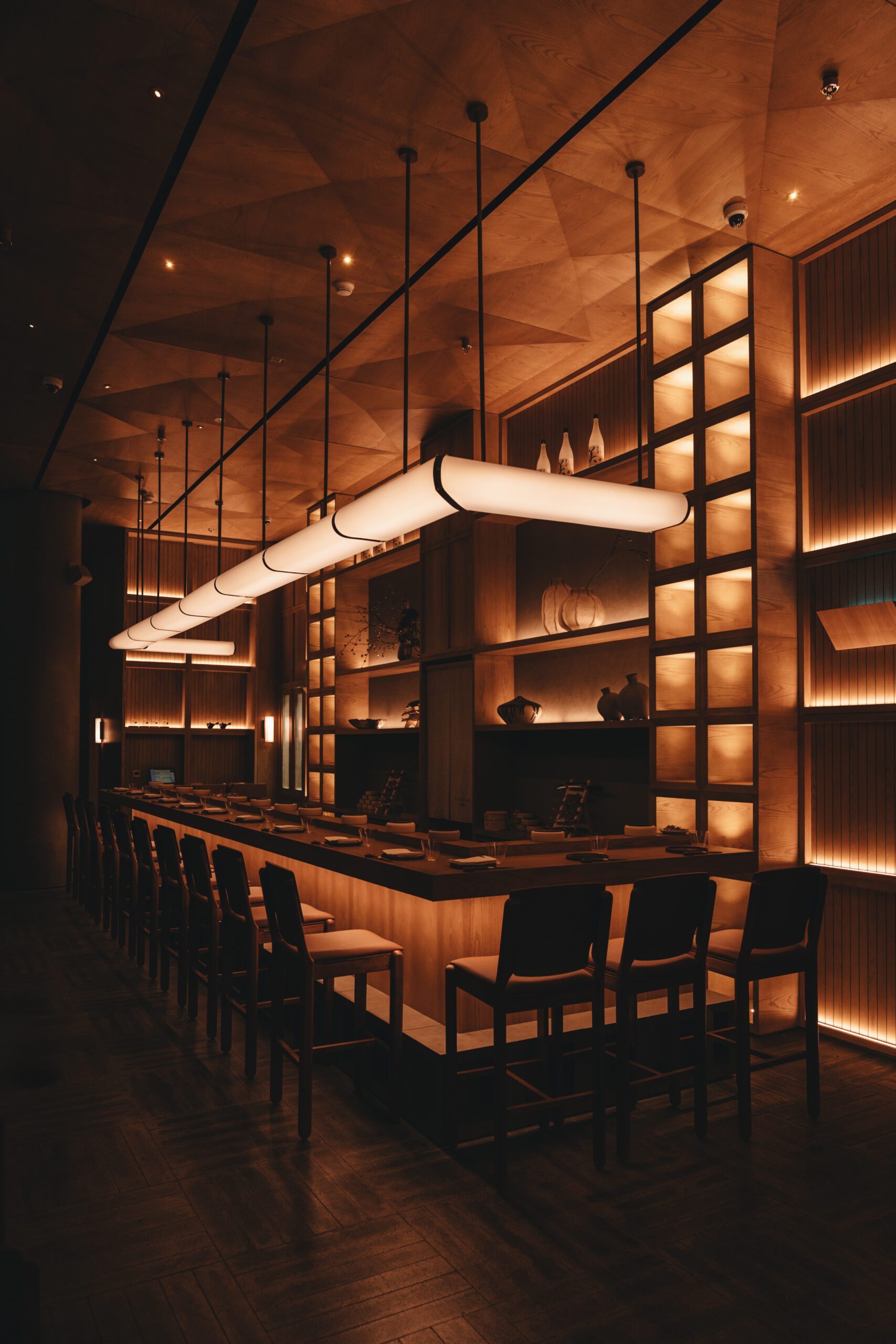
Tezukuri seats fourteen at the counter and immediately feels like one of Dubai’s most considered new Japanese openings. Led by Chef Neha Mishra, the focus is unapologetically on temaki, done properly. Rice arrives warm, nori stays crisp, and each hand roll is assembled directly in front of you with quiet precision. The name translates to “handmade”, and that idea carries through the entire experience, from the discipline of the counter to the measured pace of service. You come for the hand rolls, but the evening extends beyond the food. A hidden listening room shifts the energy, phones put away, vinyl playing, a carefully composed martini menu setting the mood. In its confidence and clarity, Tezukuri captures something essential about Dubai’s dining scene today: driven by curiosity, collaboration and the freedom to build something distinctly its own.
What ties all these places together is not cuisine, location or style. It is the belief that intimacy changes everything. With fewer seats, a restaurant becomes a space for presence instead of performance. Guests become part of the moment rather than observers. Dubai’s dining scene may be defined by scale, but some of its most interesting stories right now are being told at the smallest tables in the city.
Image credit: Supplied

Pallavi is a freelance food and travel writer who has explored more than 35 countries and dined at over 130 Michelin-starred restaurants. Born and raised in the UAE, she spent three decades witnessing Dubai’s transformation into a global culinary hub.