The founder speaks on the virtue of patience – both in fermentation and life
Not many people in Dubai are doing what Maher El-Tabchy does.
The founder and fermentation guru of sorts operates his establishment, Tabchilli, with a passion for all things real and alive. Tabchilli doubles as a fermentation school, where El-Tabchy hosts workshops on how to make your own fermented, raw and probiotic-rich food, while also stocking a retail space for all his products, in store and online, and selling them in supermarkets across the city.
Most recently, Tabchilli has gone through an upgrade, moving into a bigger space to accommodate expanding operations and growing demand. We sat down with El-Tabchy to talk about all things fermentation, the prevalence of this practice around the globe, and what must one do when the going gets tough.
View this post on Instagram
Tell us more about the origin of Tabchilli – how did you start your fermentation journey?
Tabchilli started from a frustration that kept growing. I couldn’t find real fermented food. Not the kind that is alive, slow, and properly made. Everything in the market felt engineered – either dead, rushed, or simplified to make it easy to sell. The real process is not easy. It’s technical, it’s unstable, and it requires patience and discipline. Most people avoid it at scale because you can’t control it the way you control industrial food.
That’s exactly why I went into it.
I wanted to bring back something real. Food that is alive. Food that actually contributes to health, not just fills a shelf. When you look at the rise of diabetes and chronic disease, it’s clear we’ve drifted too far from what food is supposed to be. So, essentially, Tabchilli was built to close that gap. To make real, living food accessible again.
You must have learned much about the history of fermentation during your journey – what significance does this process hold in cooking in the global context?
Fermentation is one of the few things that every culture understood long before science explained it. It wasn’t a trend. It was survival, but also intuition. People knew that food transformed over time, and that transformation made it better – more stable, more digestible, more nourishing.
From kimchi to sauerkraut to kefir, every region developed its own system. Different ingredients, same principle. Let nature do the work. What’s powerful is that fermentation doesn’t just preserve food, it changes it at a deeper level. It breaks things down, builds new compounds, introduces life into the food itself.
View this post on Instagram
You recently switched to a new location – why the shift?
The old space wasn’t enough anymore – not for the level of production we needed, and not for the standard we wanted to maintain. Fermentation is sensitive. Temperature, humidity, timing – everything matters. If you don’t control those variables, you don’t have consistency. And if you don’t have consistency, you don’t have trust. The new space allows us to do this seriously.
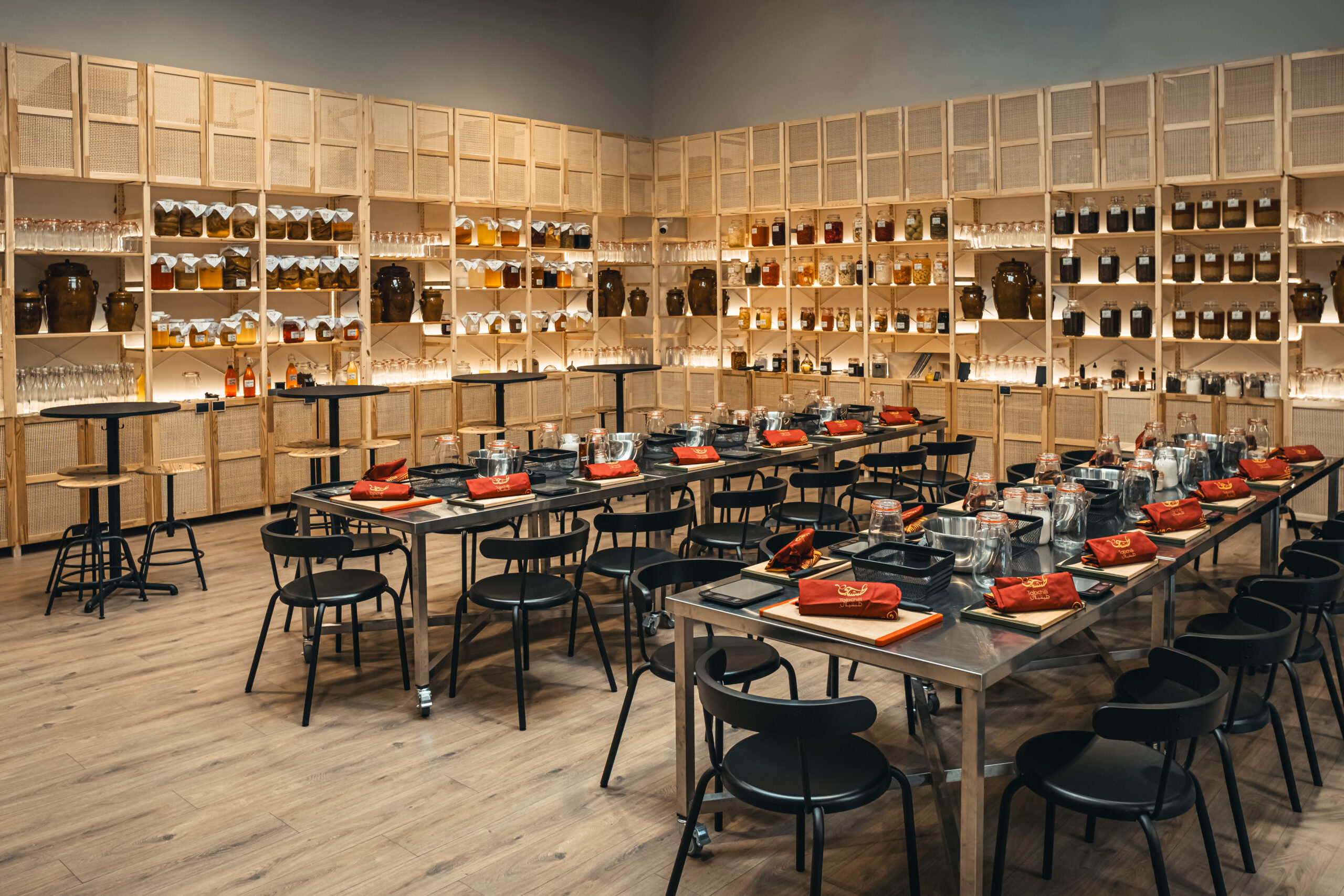
What can customers expect from the new store experience?
You can see the process, understand what’s happening, ask questions, learn, and experience it directly. There’s transparency in it. Nothing hidden. We want people to walk in curious and leave with a different perspective. Not just about fermentation, but about what real food actually means.
You opened your new location at the start of a difficult time in the region – has that impacted your transition in any way?
It’s not the easiest time to open anything. There’s uncertainty, people are more cautious, and the general mood shifts. But at the same time, moments like this bring clarity. We’re staying focused. Tight on operations, close to our customers, and clear on why we’re doing this.
View this post on Instagram
There has been some media discourse recently, about how the F&B sector calling for people to come and dine out is insensitive – what are your thoughts on this?
It’s a sensitive space, and it should be treated as one. There are real people behind every restaurant -teams, families, suppliers, so shutting down completely isn’t always an option. But at the same time, pushing aggressively without awareness can feel disconnected from reality. There is a middle ground. You can continue operating, but with awareness, respect, and tone that reflects what’s happening around you.
How is Tabchilli giving back to the community during this time?
We commit 1 per cent of our revenue to supporting children with Juvenile Idiopathic Arthritis. That connection is important to us, because it brings the conversation back to where it should be – health, from an early stage. But beyond that, the work itself is a form of contribution. The message is simple: be more aware of what you consume, support what is real.
Image credit: Supplied
Deeply passionate about food, culture and community, Manaal loves telling extraordinary stories of ordinary people. Besides sniffing out a tale to tell, her favourite things to do include binging true crime documentaries, chasing cats on the streets and curating a good outfit.