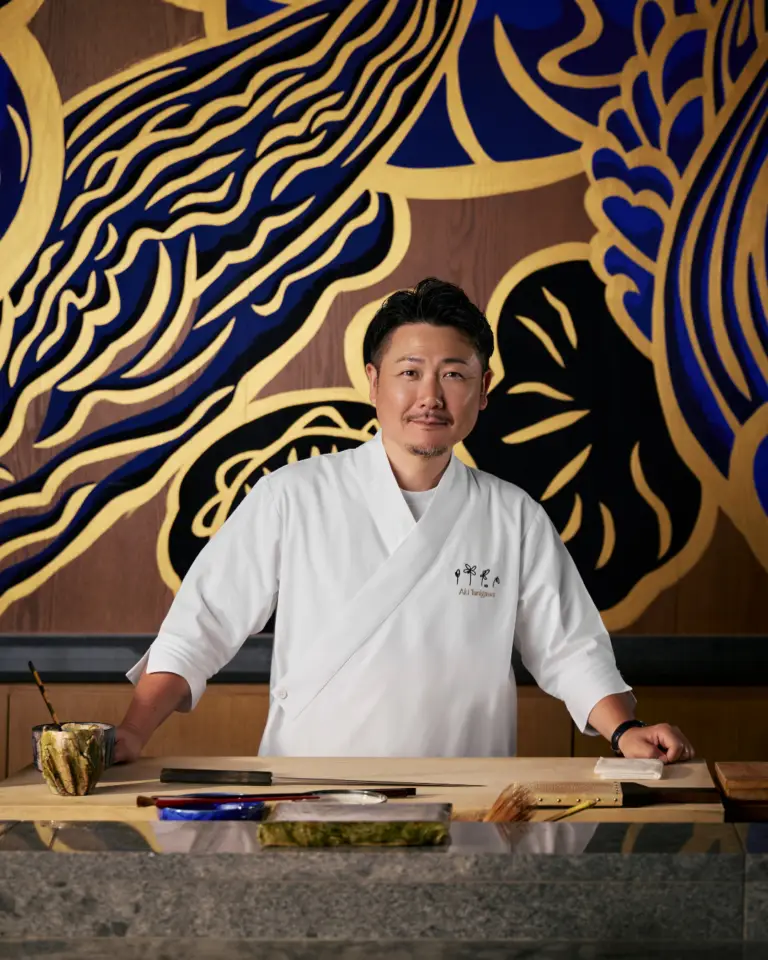
The chef remains mindful of preserving the core of kaiseki – the changing seasons
Tell us a little about kaiseki – what does the term mean? What is it’s place in Japanese cuisine?
Kaiseki was initially developed as a meal served before tea in the Japanese tea ceremony, allowing guests to enjoy the tea fully. The name is said to come from the practice of Zen monks placing warm stones inside their robes to ease their hunger. For me, kaiseki is a form of Japanese cuisine that brings together an appreciation of the seasons and a spirit of hospitality. At KIGO, we embrace this philosophy, paying attention to everything from the natural qualities of the ingredients to the tableware, the temperature of each dish, and the sequence in which it is served.
Why is it so important in Japanese cuisine to honour the seasons? What is the history of this practice?
Japanese food culture evolved alongside the rhythms of nature, from harvests to seasonal celebrations. Our choice of ingredients, cooking methods, tableware, and presentation reflects an appreciation of the seasons and a respect for what nature provides. Greenhouse cultivation and aquaculture have made some ingredients available throughout the year. And because we live in such an age, I believe it is important to value the distinctive flavours of each season. Bringing out the natural qualities of seasonal ingredients allows us to enjoy both their flavour and their nourishment. For me, this thoughtful approach to food supports our well-being and lies at the heart of Japanese cuisine.
The anatomy of the cuisine changes vastly from region to region – can you tell us about how you incorporate all the different elements in your menus?
I begin by selecting ingredients that are in season and in excellent condition. I then draw on the food culture of their regions and the cooking methods that best bring out their qualities to build the menu. While respecting each region’s character, I introduce variety in flavour, aroma, and texture, giving each dish its own identity while maintaining harmony throughout the meal.
What is special about the autumn season in the calendar?
In Japan, autumn holds a special place as a time to celebrate the harvest and give thanks for nature’s abundance. I also find great beauty in traditions such as moon viewing and appreciating the changing colours of the leaves. As a chef, I am drawn to ingredients with rich aromas and depth of flavour, such as mushrooms, autumn fish, and chestnuts. The opportunity to express the colours of fallen leaves and the deepening of autumn through food and tableware is part of what makes this season so inspiring.
Tell us about some of your favourite dishes on this menu and the inspirations behind them?
One of my favourites is hoba-yaki, a dish cooked on a magnolia leaf. It brings together the fragrance of the leaf, the toasted aroma of miso, the umami of mushrooms, and the delicate flavour of white fish. The balance between these elements is central to the dish. What I wanted to evoke was a glimpse of autumn among fallen leaves. Through its flavour, rising aromas, and presentation, I hope guests can experience a sense of autumn in Japan.
The experience and hospitality seem to be an equally important part of the menu as the food itself – does this tie into traditions back home?
Yes. In the tea ceremony, welcoming guests involves not only food, but also tableware, flowers, and the surrounding space. That philosophy is closely connected to our work. For me, hospitality is about care in every detail: the temperature of a dish, the timing of service, how we explain the food, and knowing when to engage with guests and when to give them space. I want the time they spend with us to be as memorable as the food itself.
How do you formulate and transform traditional ingredients for the Dubai palette?
At KIGO, we want to share the appeal of Japanese cuisine with guests who are seeking a deeper appreciation of Japan’s food culture. If we changed the foundations of our seasoning and cooking to suit every preference, we would move towards fusion cuisine, which is a different direction from the one we have chosen. While preserving the fundamentals of Japanese cuisine, we make thoughtful adjustments to presentation, the balance of flavours, and combinations with familiar ingredients. This is how we respond to our guests while staying true to our approach.

Deeply passionate about food, culture and community, Manaal loves telling extraordinary stories of ordinary people. Besides sniffing out a tale to tell, her favourite things to do include binging true crime documentaries, chasing cats on the streets and curating a good outfit.