The minds behind these iconic concepts in Dubai dish on a growing culture
From Gymkhana to Sexy Fish, Jamavar to MiMi Mei Fair and COYA to Barrafina, familiar names are finding that a London reputation is only the beginning.
“A famous name opens the door once; it does not bring anyone back.” For Yannis Stanisiere, Chief Operating Officer of COYA Global, that distinction explains what it takes for a restaurant to build a life in Dubai.
A Mayfair connection might secure an initial reservation. Giving diners a reason to make the next one is a different task.
It is a question facing a growing collection of restaurants with addresses in both cities. Gymkhana, Sexy Fish, Jamavar and MiMi Mei Fair all bring established reputations to Dubai, while COYA offers the perspective of an earlier arrival.
View this post on Instagram
Together, their experiences suggest that the most interesting part of the journey happens after the name goes above the door – deciding what to preserve, what to adapt and how to become part of the city.
The Foot in The Door
For Samyukta Nair, Creative Director & CEO of LSL Capital, the group behind Jamavar and MiMi Mei Fair, Mayfair provides a useful introduction.
“When we entered Dubai, the Mayfair connection gave people a point of reference,” she says. “Our responsibility was to make each restaurant earn its place here.” This matters for two restaurants with very different identities.
Jamavar’s cooking draws on India’s regional traditions, while MiMi Mei Fair builds its experience around the imagined world of Empress MiMi. Neither identity depends entirely on a London postcode. The challenge is expressing it in a new setting.
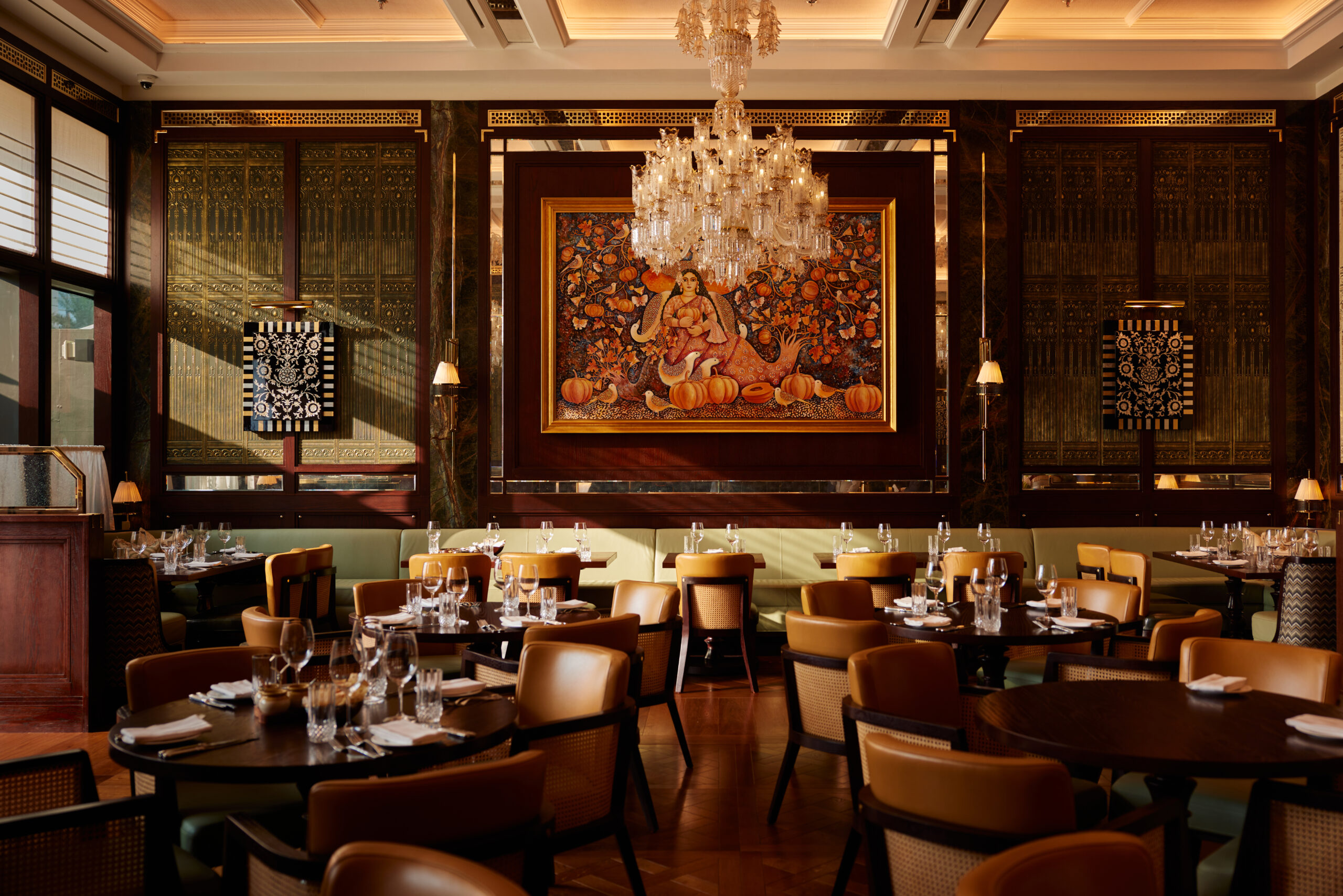
“For me, consistency doesn’t mean making every restaurant identical,” says Nair. “It means knowing what must endure and where a new setting gives you room to create.”
At Gymkhana, that balance comes with a ratio. According to the team at Gymkhana, 80 per cent of the menu retains the restaurant’s core London identity and signature dishes, while 20 per cent is created exclusively for Dubai. Those additions include Makhmali King Crab and Malai Pyaaz and Wagyu Beef Sukka with Bone Marrow.
The thinking behind them offers a revealing view of the audience. The team describes Dubai diners’ familiarity with Indian cuisine as an invitation to explore further.
“Because the audience already understands the diversity of Indian regional flavours so well, it gave us the confidence to push the creative boundary further than at any other outpost.”
The surroundings have been reconsidered, too.
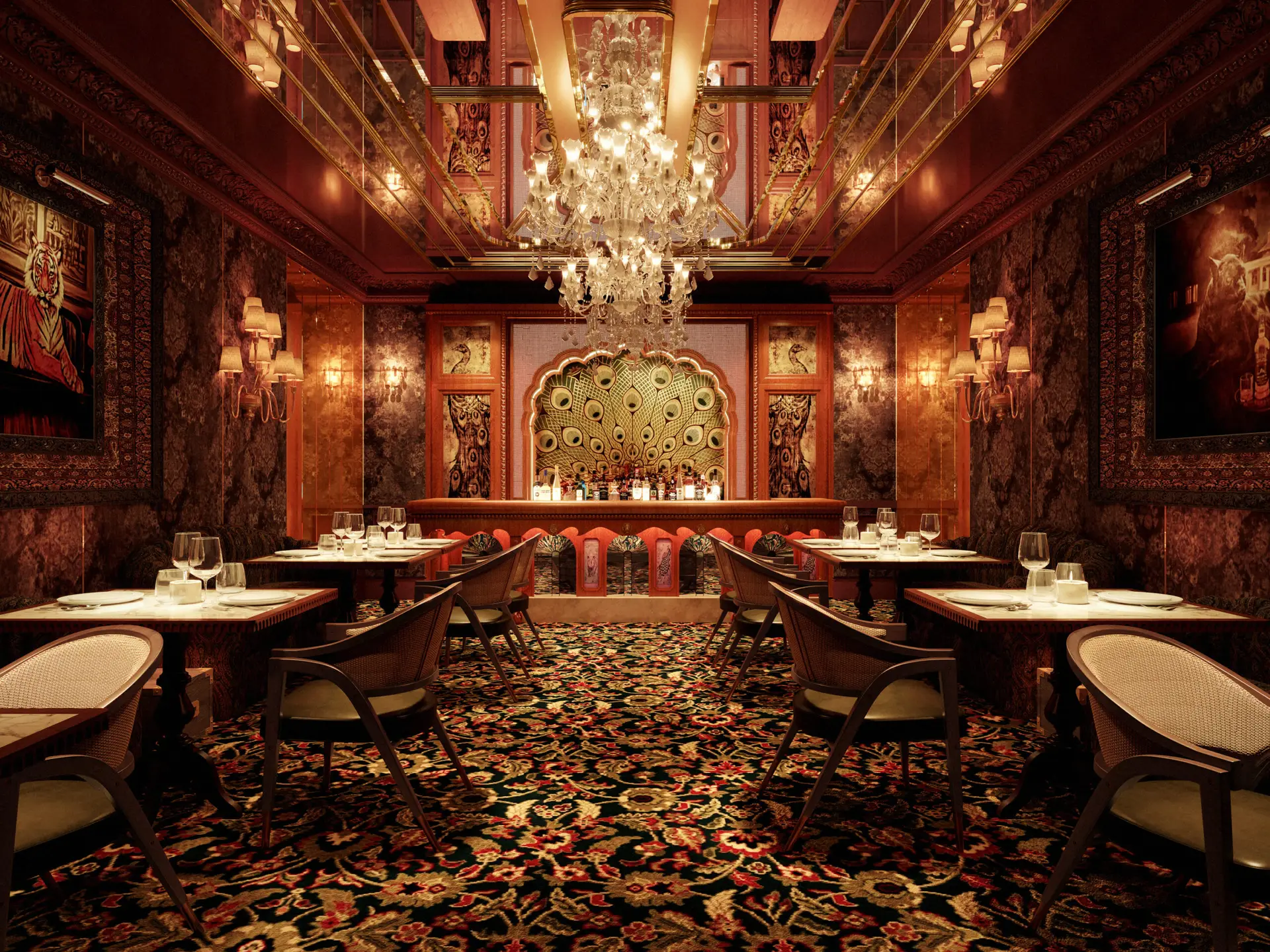
Warmer timbers and lighter green hues give the Dubai restaurant a brighter interpretation of Gymkhana’s club-inspired setting. The team also points to Executive Chef Rahul Rana’s decade of local experience as an influence on how the restaurant responds to its new home.
Crafting An Experience
Elsewhere, adaptation has been as much about how an evening unfolds as what arrives on the plate. MiMi Mei Fair’s Dubai restaurant is larger than its Mayfair counterpart, with a Moon Bar and a Garden Terrace overlooking the Burj Khalifa.
Nair mentioned that those spaces allow a different rhythm. Lunch might stretch into the afternoon; dinner might lead to drinks.
Brunch has provided another way to respond to local dining habits. Jamavar’s Royal Brunch and MiMi Mei Fair’s Dim Sum Dynasty Brunch introduce a format Nair says is new to both restaurants, allowing each to participate in Dubai’s weekend culture through its own food and atmosphere.
View this post on Instagram
At COYA, music prompted a more fundamental rethink.
“We saw it as part of the late evening,” says Stanisiere. “In Dubai, it became central to the whole experience, which is why we put the DJ booth at the centre of the restaurant when we renovated it in 2022.”
It is a concrete example of a city influencing an established concept. Peruvian cuisine, the Pisco Bar and the restaurant’s storytelling remained central, while the way guests used the space helped shape its evolution.
The Sexy Fish team similarly describes the restaurant as a complete experience, encompassing food, cocktails, interiors, music and service. Its London reputation created awareness, they say, but also brought a responsibility to deliver something relevant to its new audience.
“We want the restaurant to feel connected to the city and to become a destination in its own right, rather than simply being a London concept replicated elsewhere.”
The Balancing Act
Across all the exports, familiarity is both an advantage and an expectation to meet. Guests who know the original arrive with a reference point. Those who do not still have plenty of alternatives.
COYA’s answer to a long lasting and cemented brand has been to invest in the details that make repeat visits feel rewarding: dishes guests return for, music that shapes the room and longstanding team members who know regulars by name. To Stanisiere, those relationships are what turn an international arrival into a local fixture.
“Dubai rewards new concepts with interest, but it only rewards consistency with loyalty.”

The Mayfair address may remain part of the story. Eventually, though, success means becoming someone’s regular table in Dubai.
As Stanisiere puts it: “That is how you stop being a London name in Dubai and become part of the city.”
@gymkhanadxb, @jamavardubai, @mimimeifair.ae, @coyadubai, @sexyfishdxb
Image credit: Supplied/@mimimeifair.ae on Instagram

Never afraid of an em-dash or trying new places across the world. Shelby thrives on sharing her favourite restaurants, cafes and hole in the walls. If she’s not eating out she’s at home trialing new recipes in her kitchen while binging series.